
Ginko Studio
Publish to one wall,
or to a thousand.
One web app to compose content, schedule the day and manage the whole fleet. A licence comes with every Ginko frame.
Effortless fleet management
From content to display, one thread.
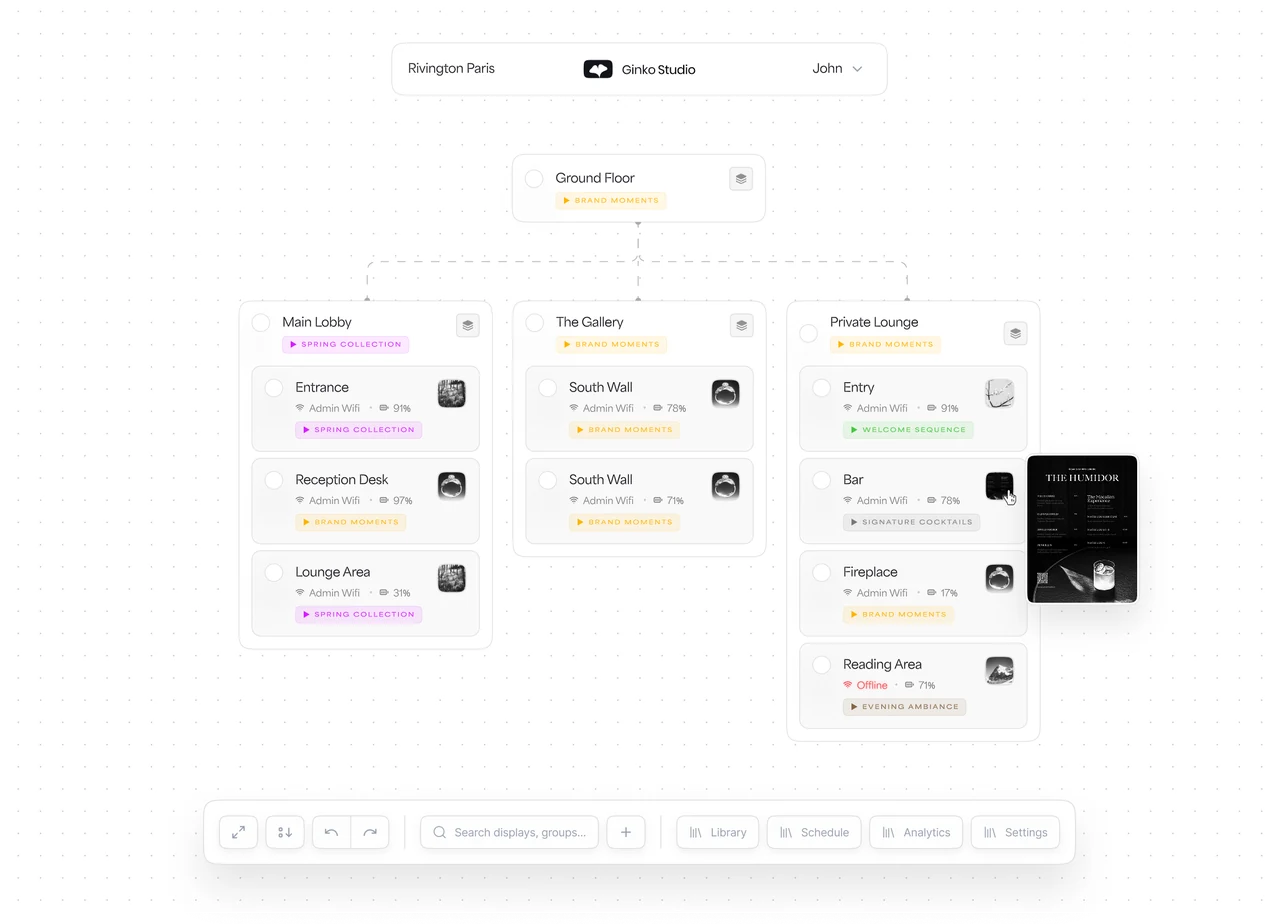
Upload, target, publish, schedule, delegate, measure. One thread from an image to a wall, and deploying to a hundred frames takes the same time as deploying to one.
-
[01]
Upload your content
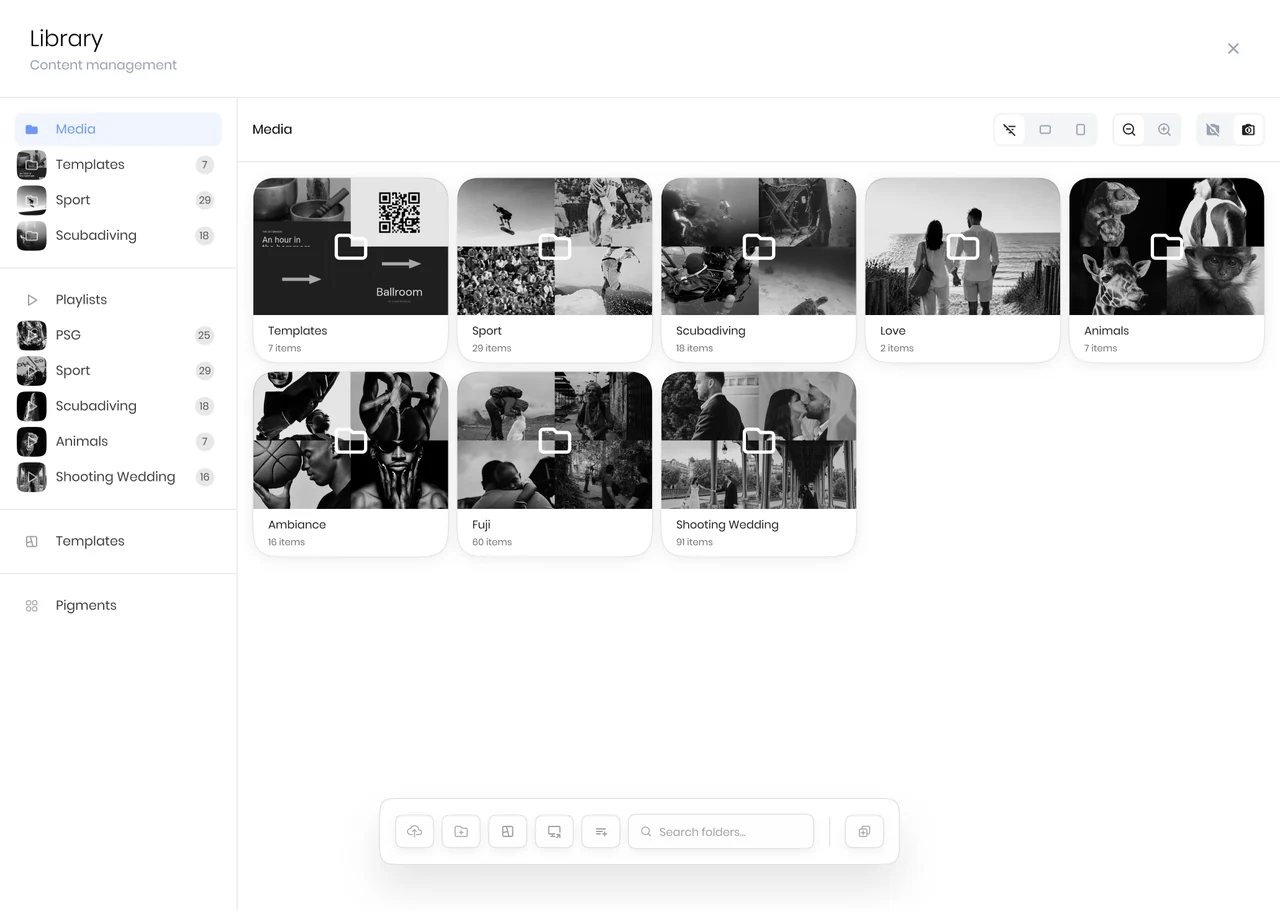
Everything starts with an idea. Images, text, artworks: upload what you want to display directly into your Content Library.
-
[02]
Assign to your displays
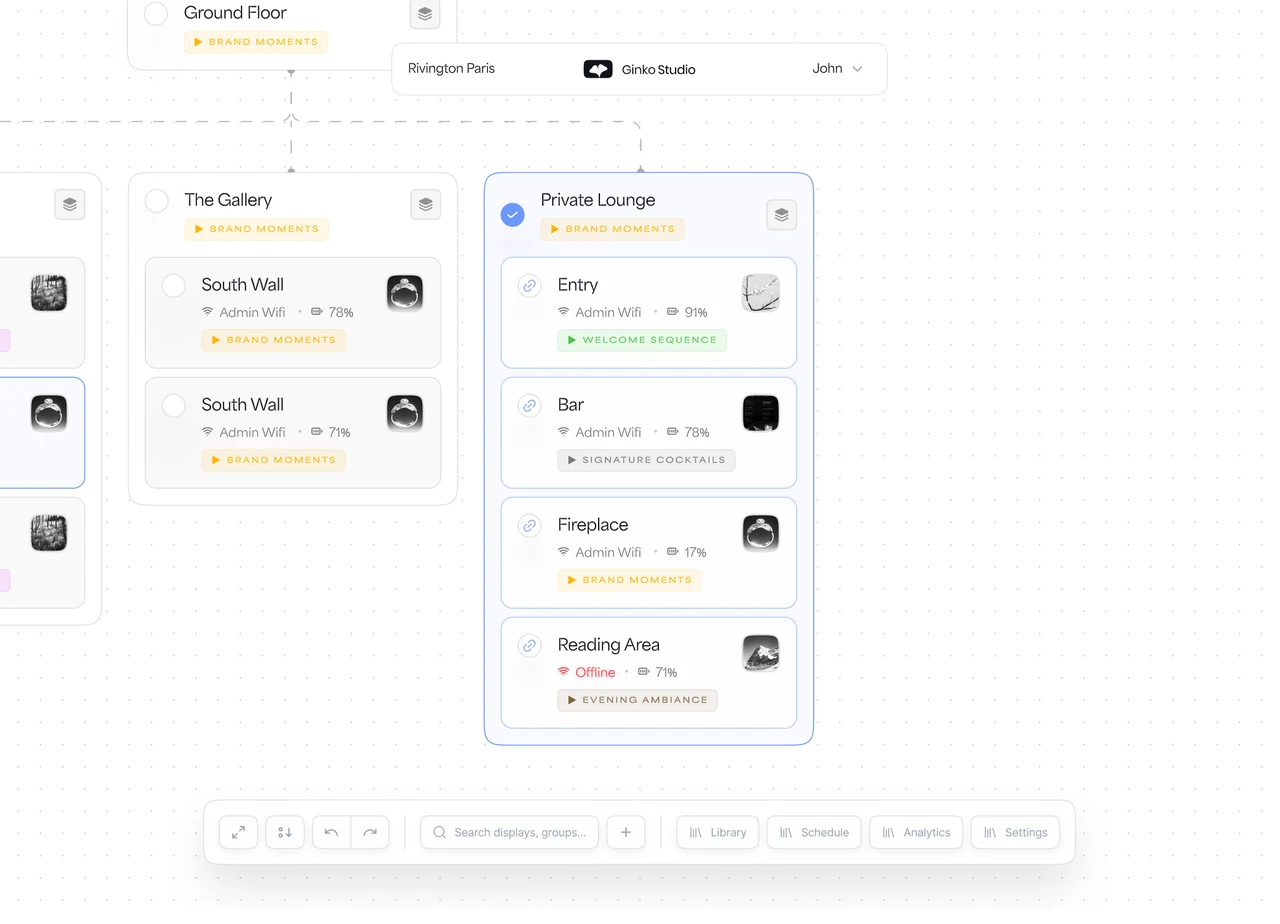
Pick where it goes. Target a single display, a floor, or a group of zones. Create tags and save presets for future updates.
-
[03]
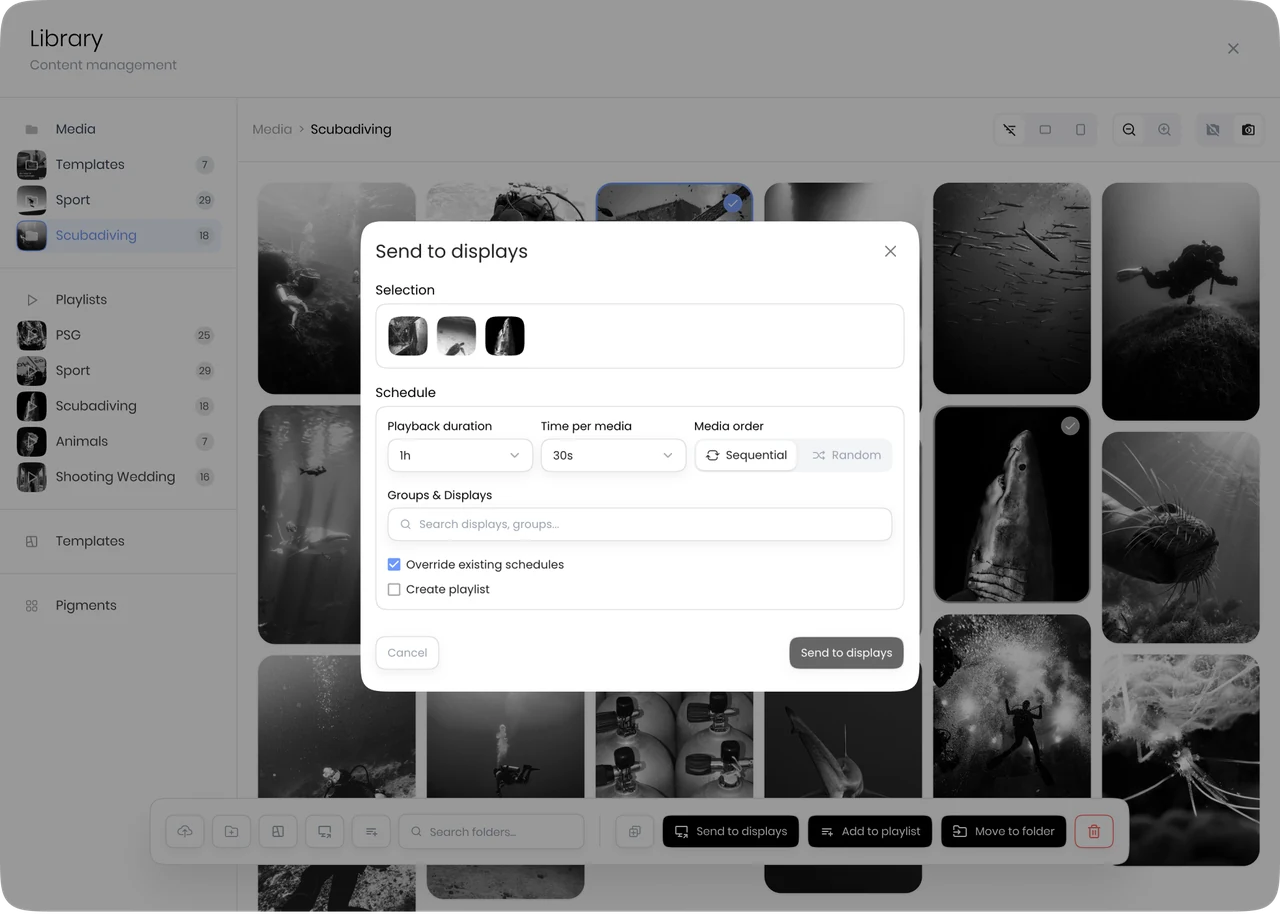
Push to display
Send your content in one click. Each display updates silently, and your image stays, drawing no power until it changes.
-
[04]
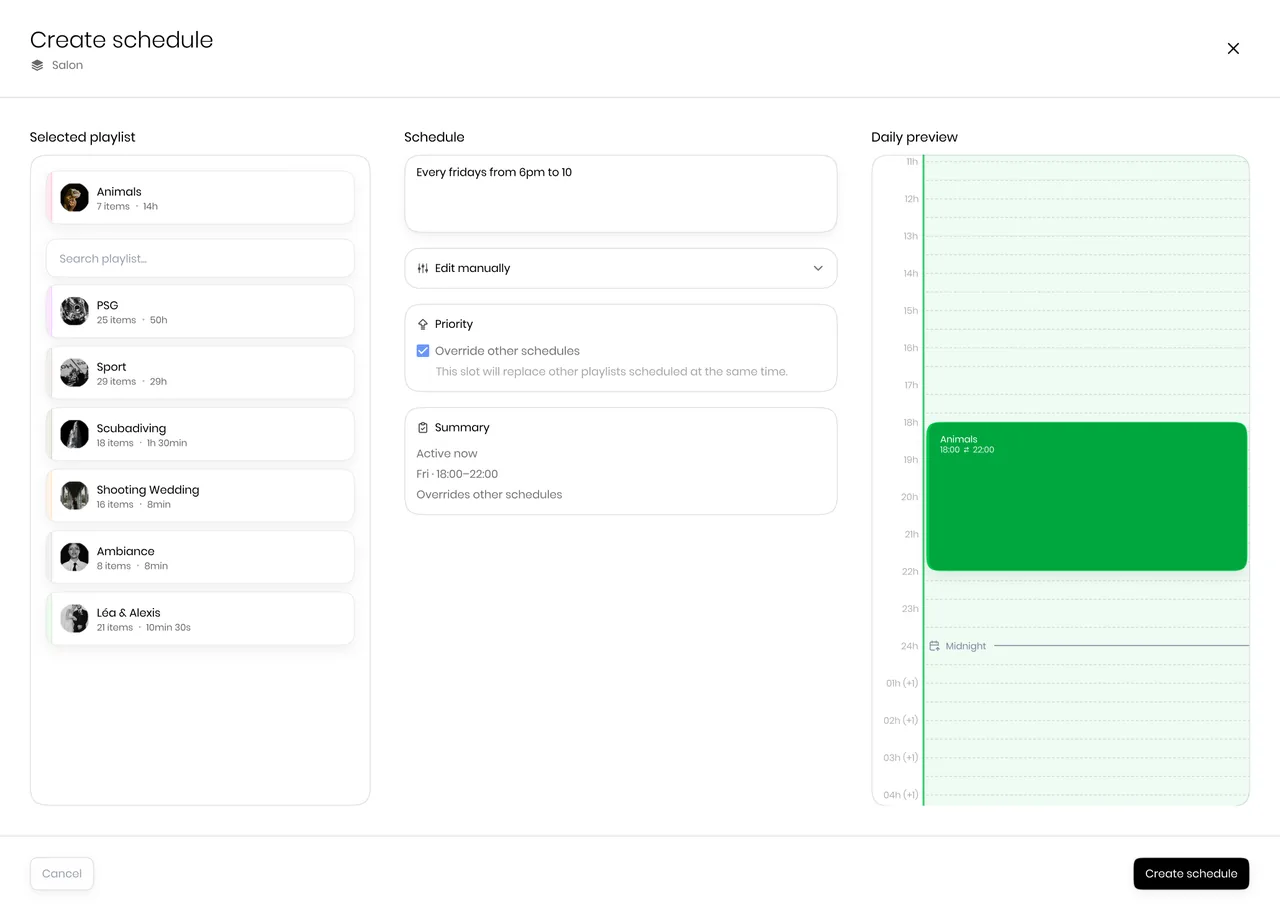
Schedule and automate
Control time as well as space. Plan content changes ahead of time, set recurring messages, or adapt automatically by time of day.
-
[05]
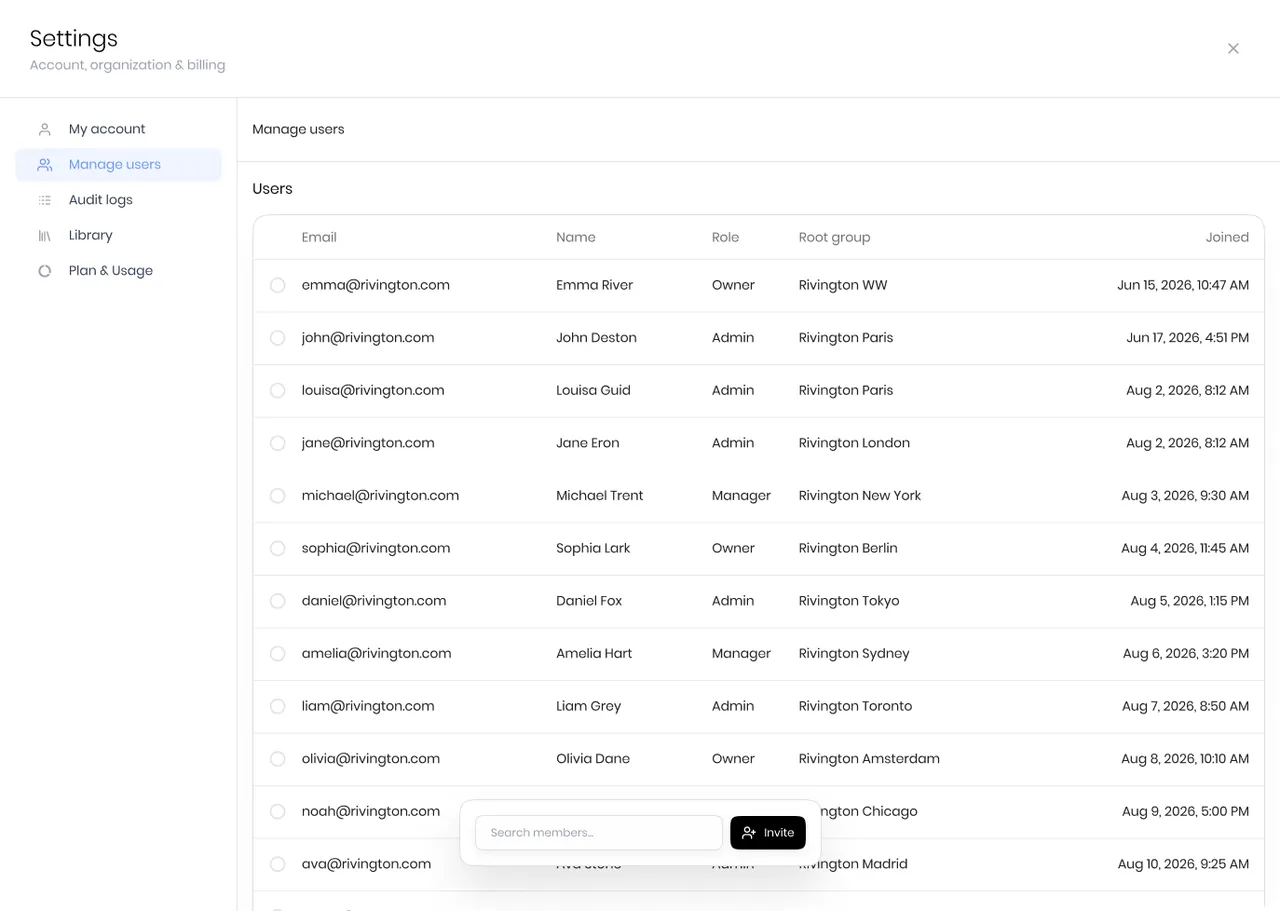
Rights, held at scale
Give each site its own hand, each brand its guardrails. Roles decide who composes, who approves, who publishes: a group steers a hundred properties without giving away the keys.
-
[06]
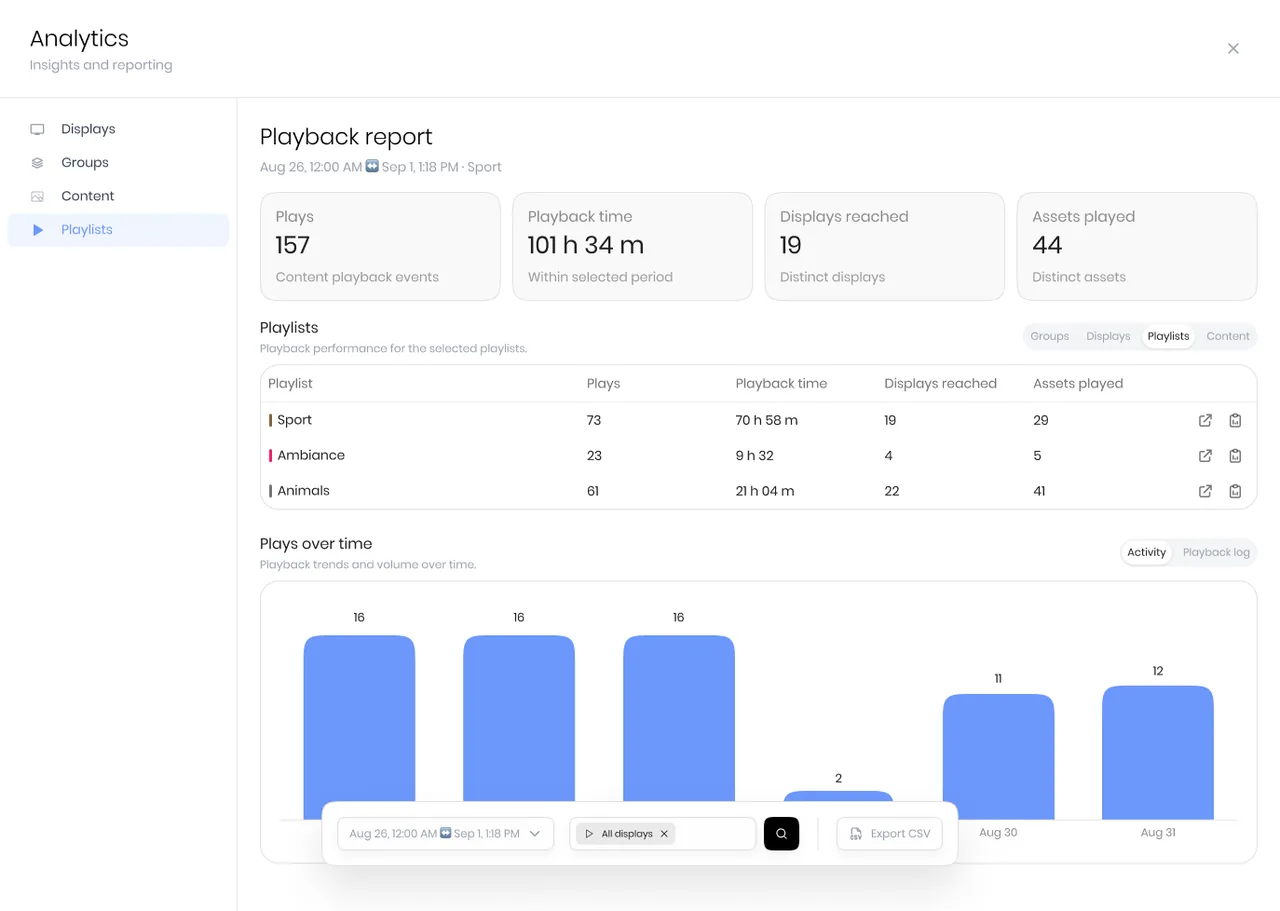
Analytics, without the noise
What played, where, and when. Uptime, battery and coverage for every wall, read from the same window: proof for the brand, figures for the operator.










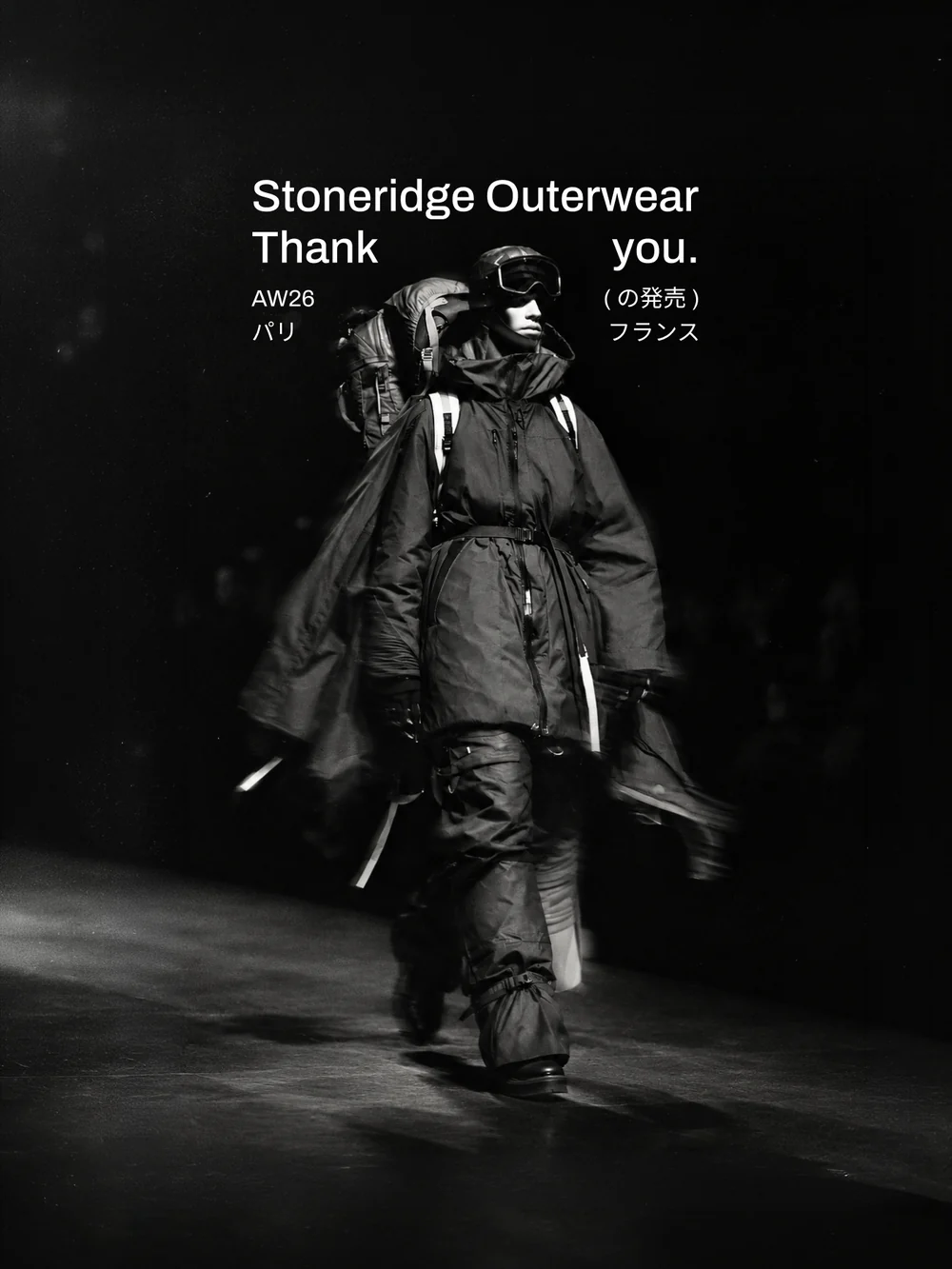
Personal Arrival. Their names, their floor, their suite, drawn for this night and no other.
Ambience Daytime. A photograph of the guests themselves, sent before the stay. Nothing to hang, the wall simply becomes theirs.
Information Turndown. Tomorrow's weather, the hour of the sun, and when breakfast opens.
Personal Departure morning. The check-out hour, said with care, and no printed card on the desk.
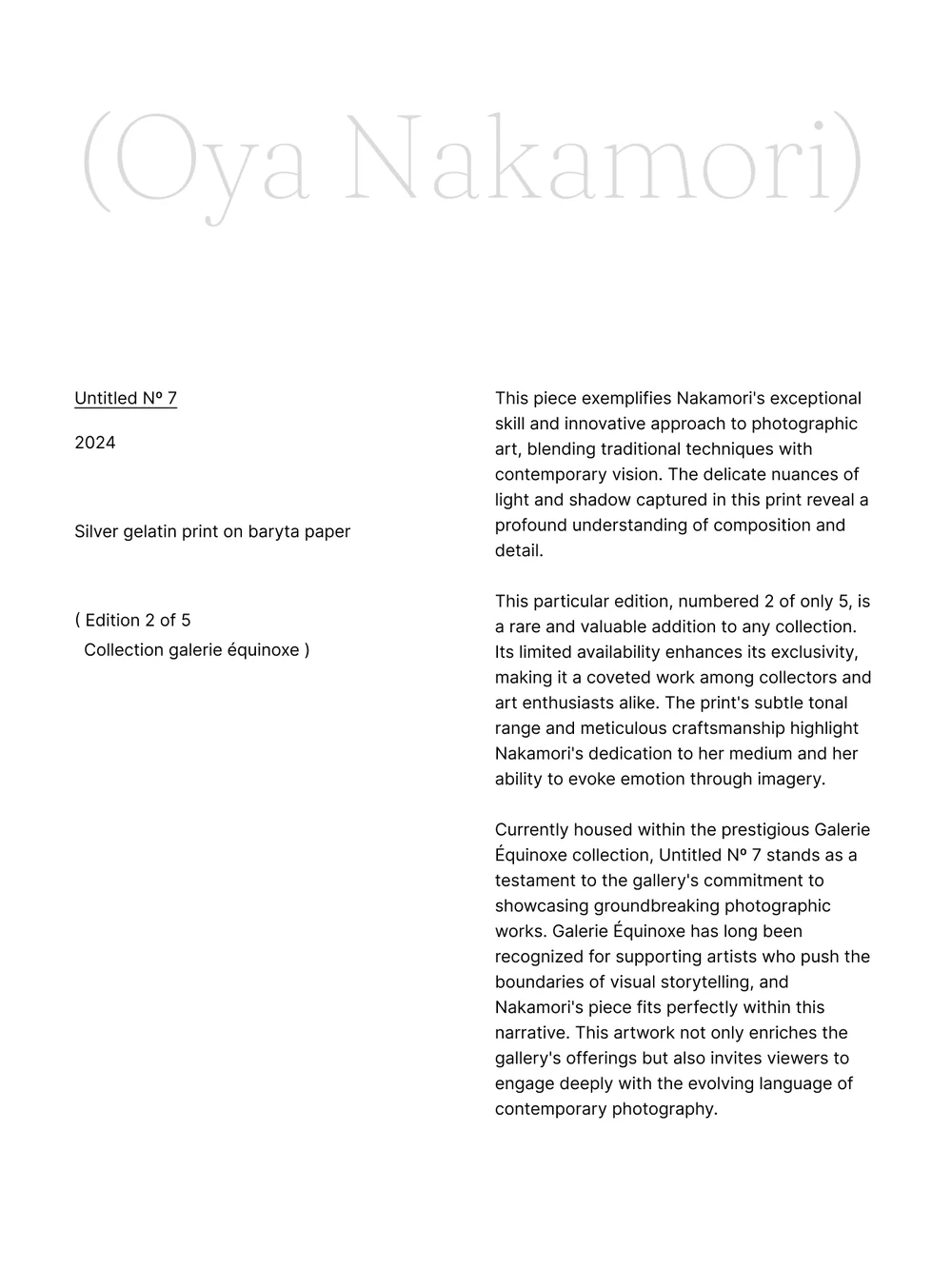
Information The wall label. Title, year, medium, edition, and the full text no printed card has room for.
Information A rehang. The wall takes the work itself, and the room changes in a morning.
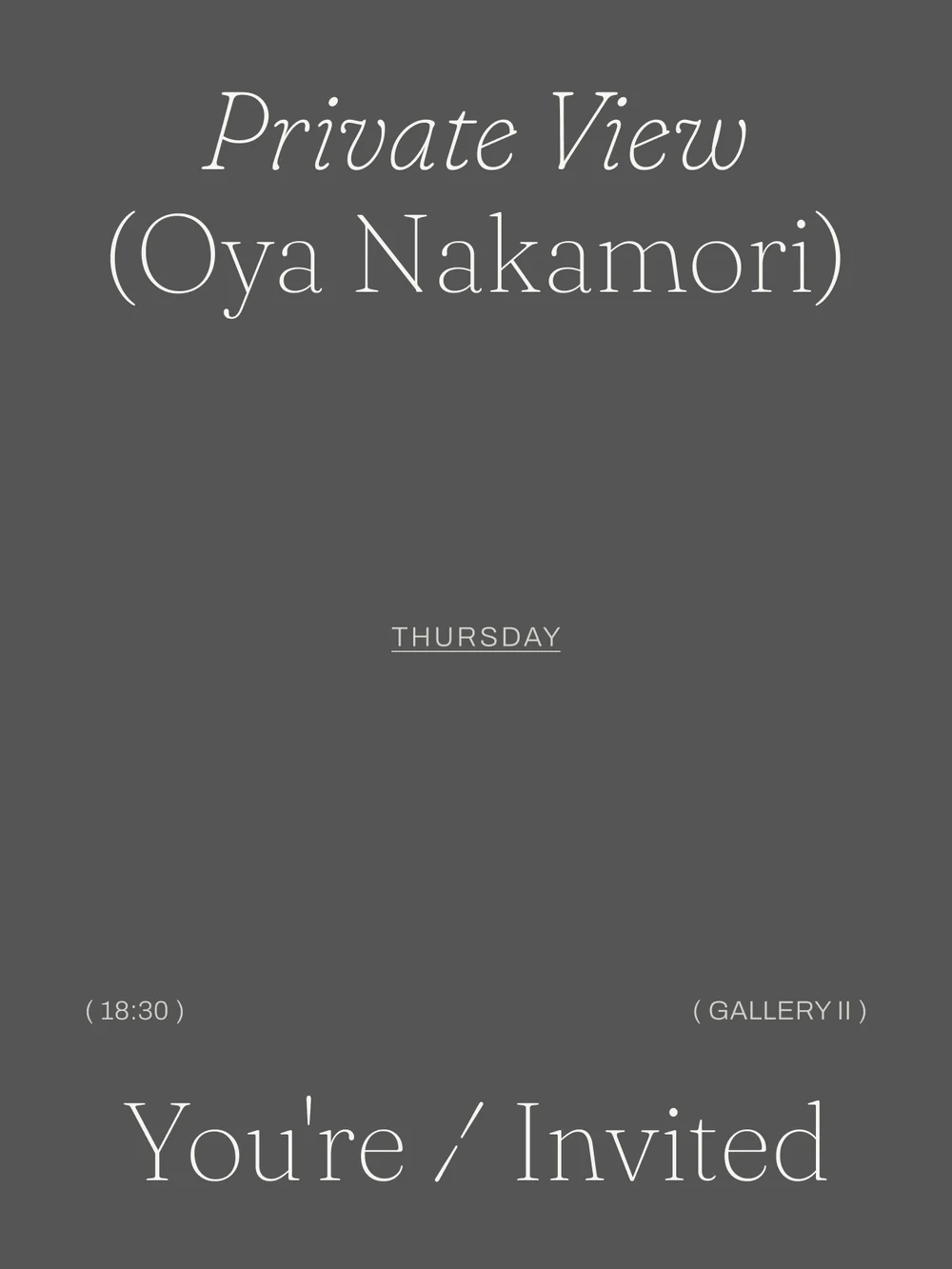
Revenue The private view. The invitation appears on every wall at once, and leaves the same way.
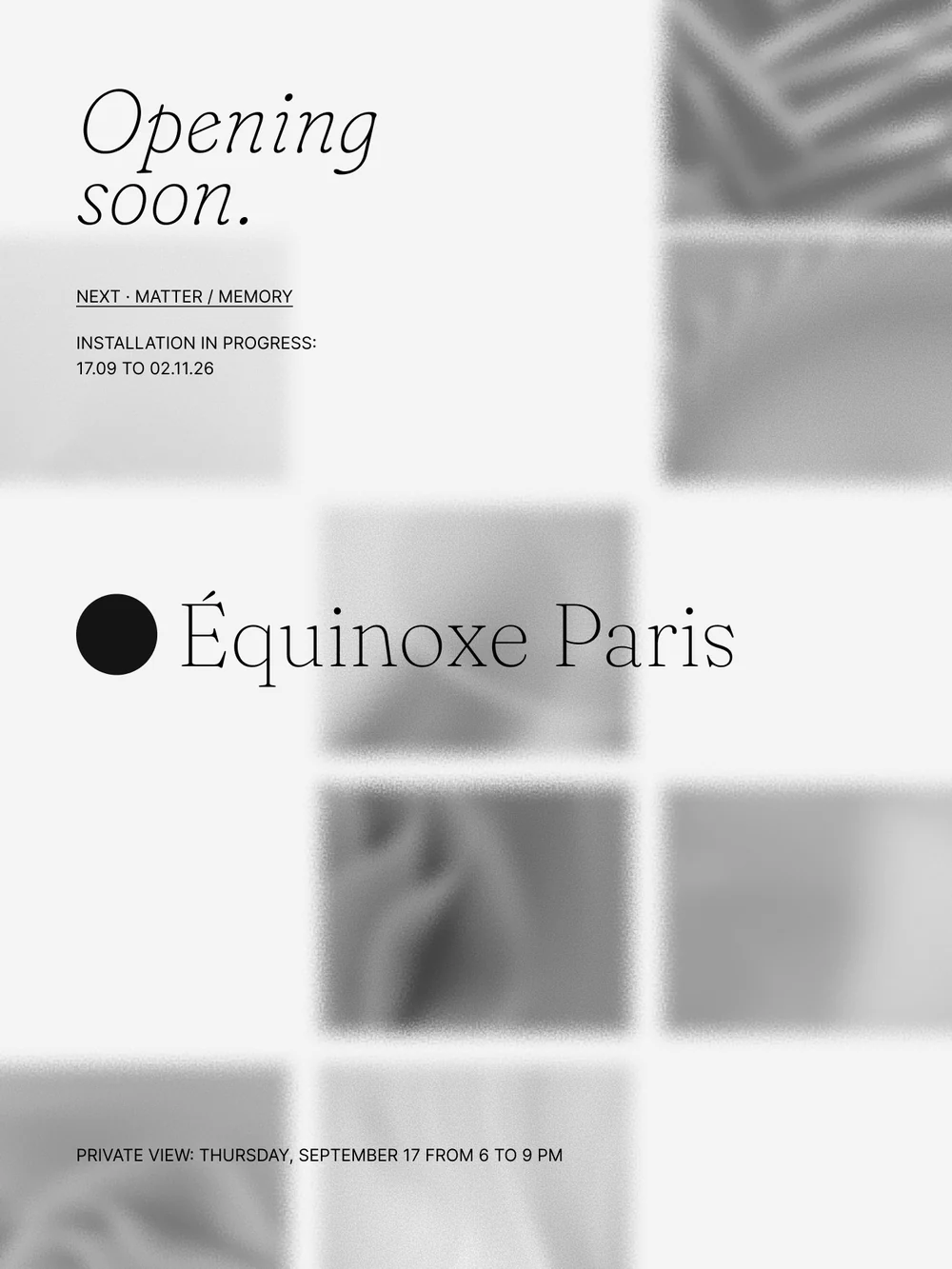
Ambience Between two shows. The room is still being hung, and already announces the next one.
Ambience Opening. The season's image, the same on every floor and in every city.
Information Early afternoon. Not the product, but the hands that make it.
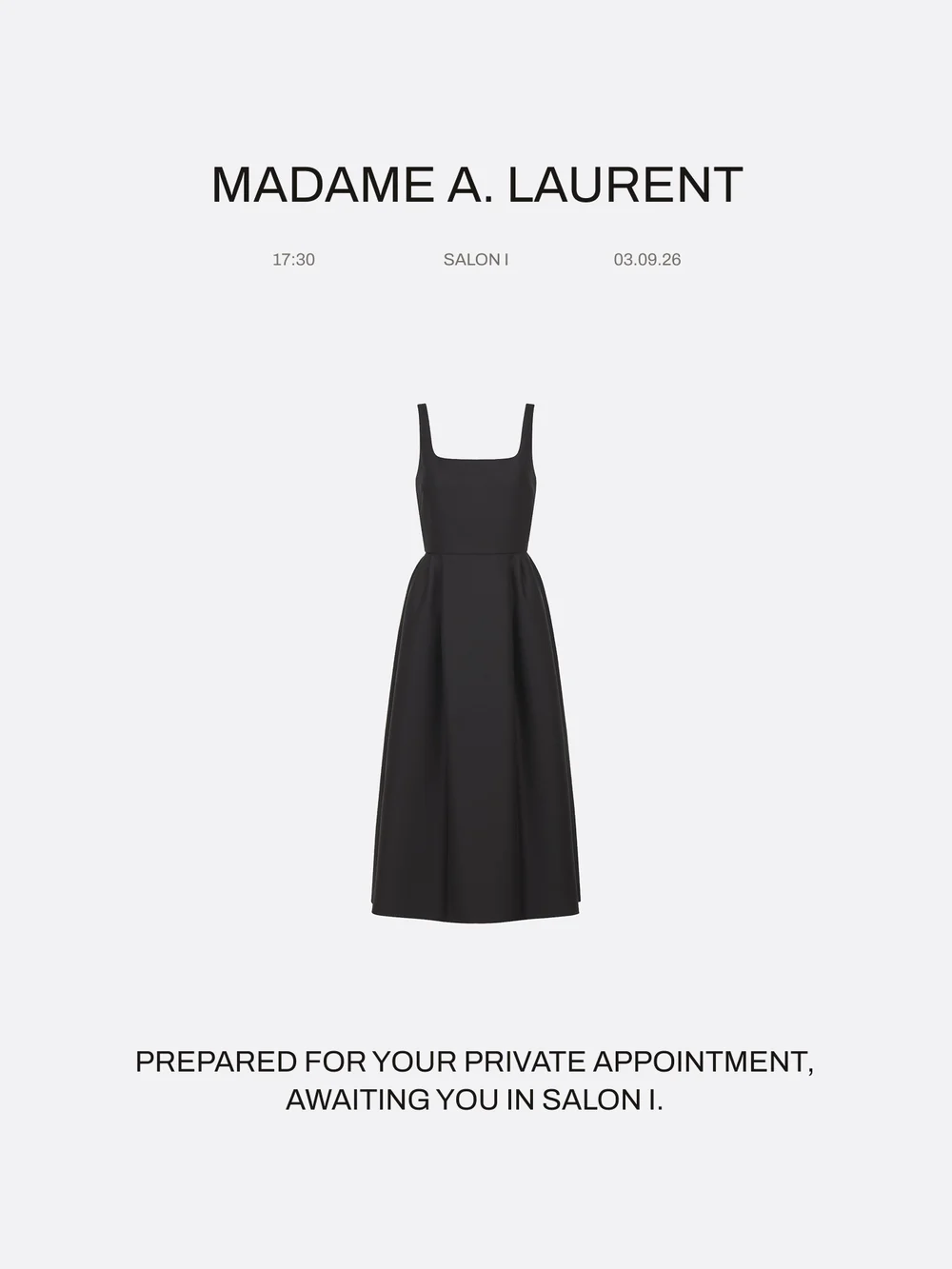
Revenue Five thirty. Her name, her salon, and the dress already waiting for her.
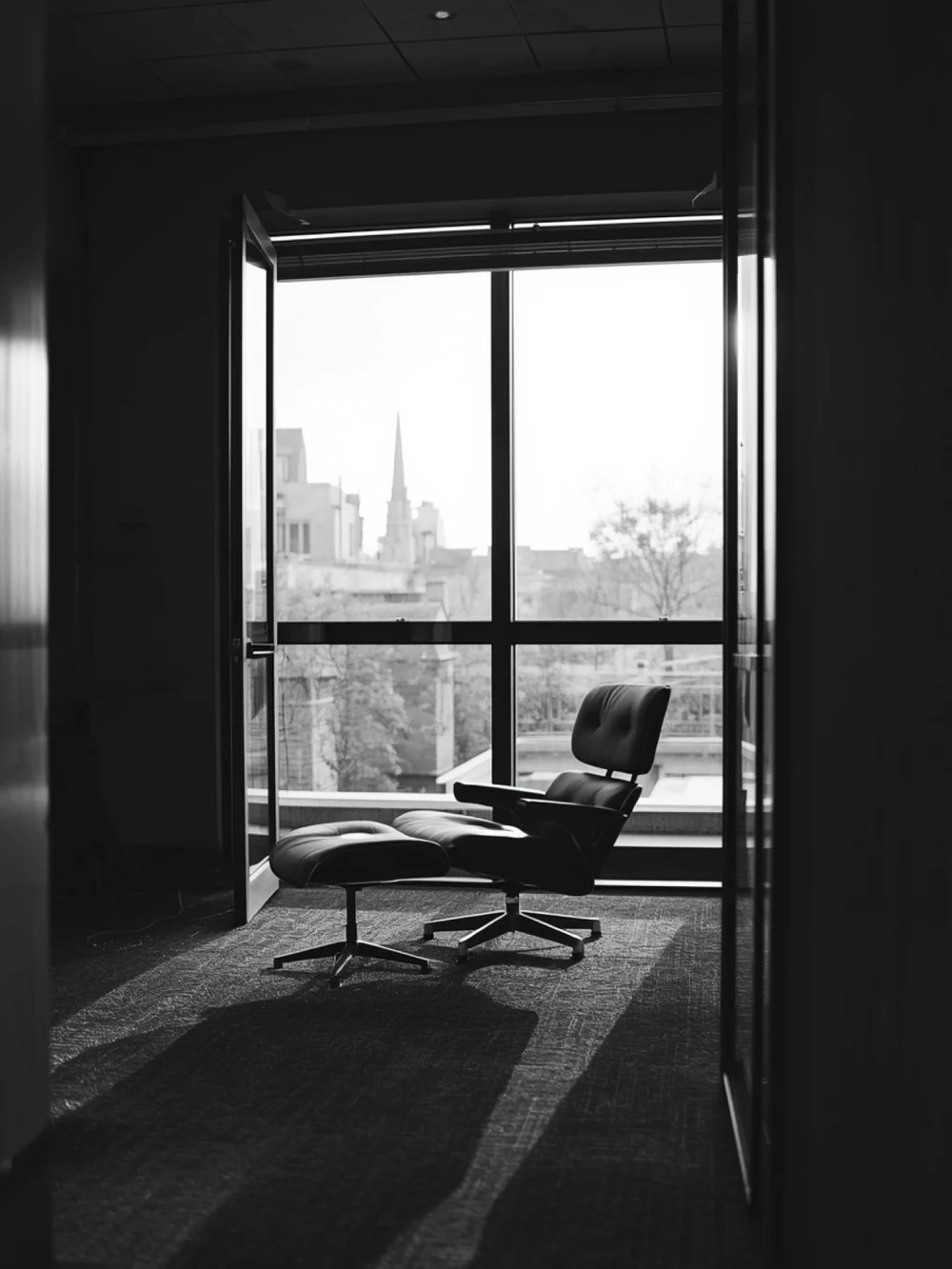
Ambience After hours. The window holds its image all night, and draws nothing to hold it.
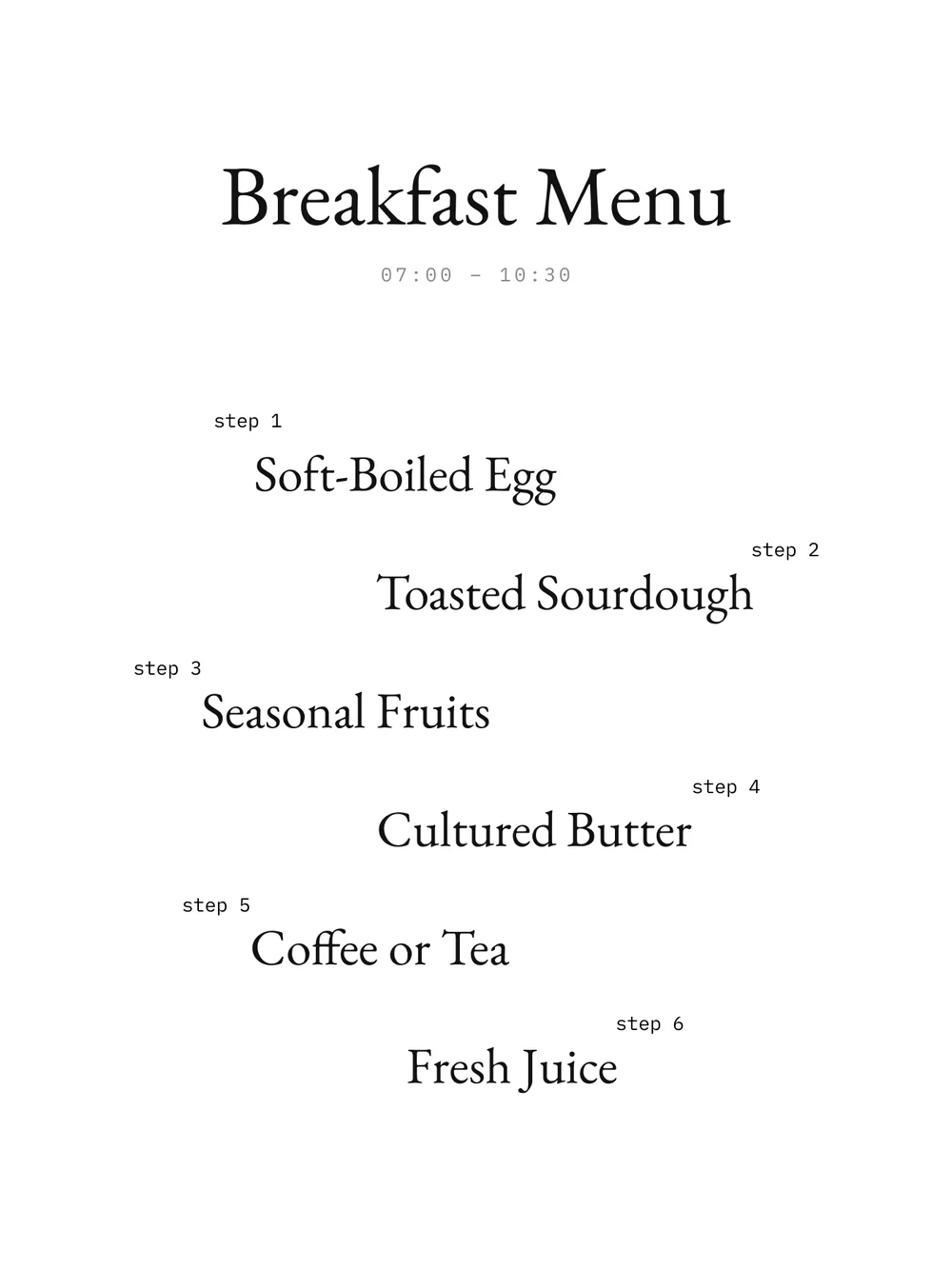
Information Half past seven. The breakfast menu, updated each morning in a few seconds. Never printed again.
Information Midday. Today's dish and its price, changed from a phone in the kitchen.
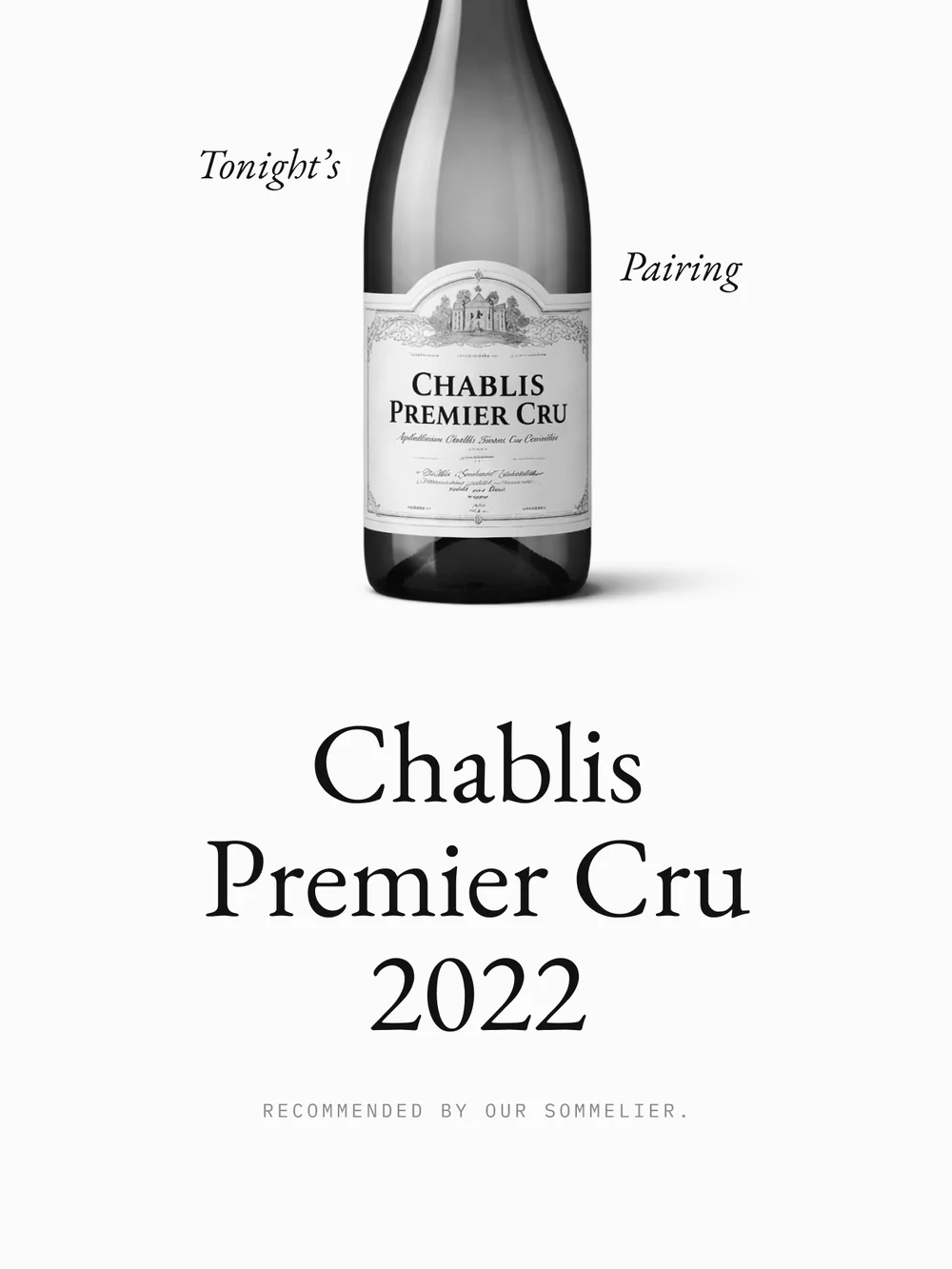
Revenue Seven in the evening. One bottle, one year, chosen by the sommelier for tonight.
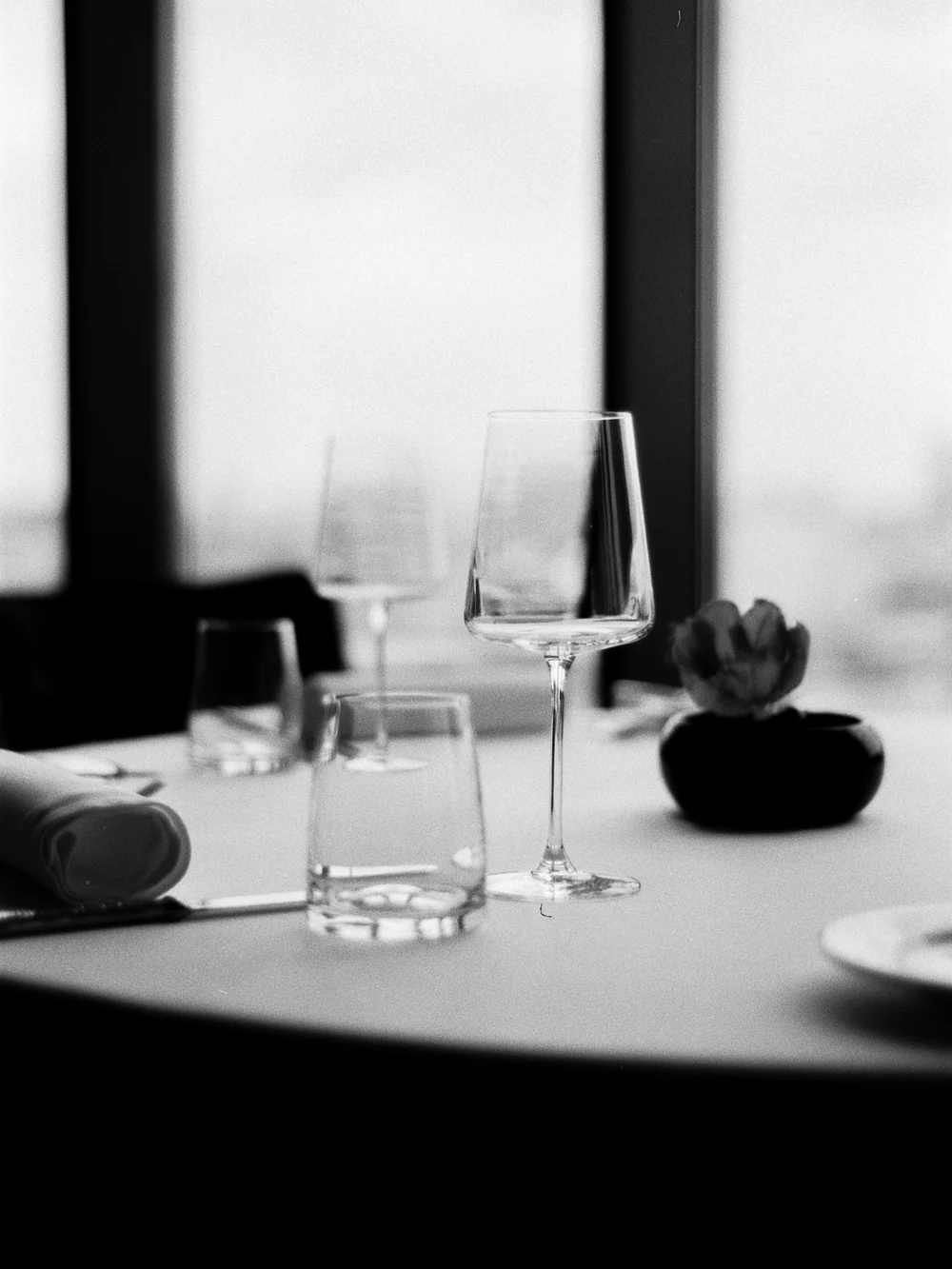
Ambience Eleven at night. Service is over, and the room keeps its face until morning.
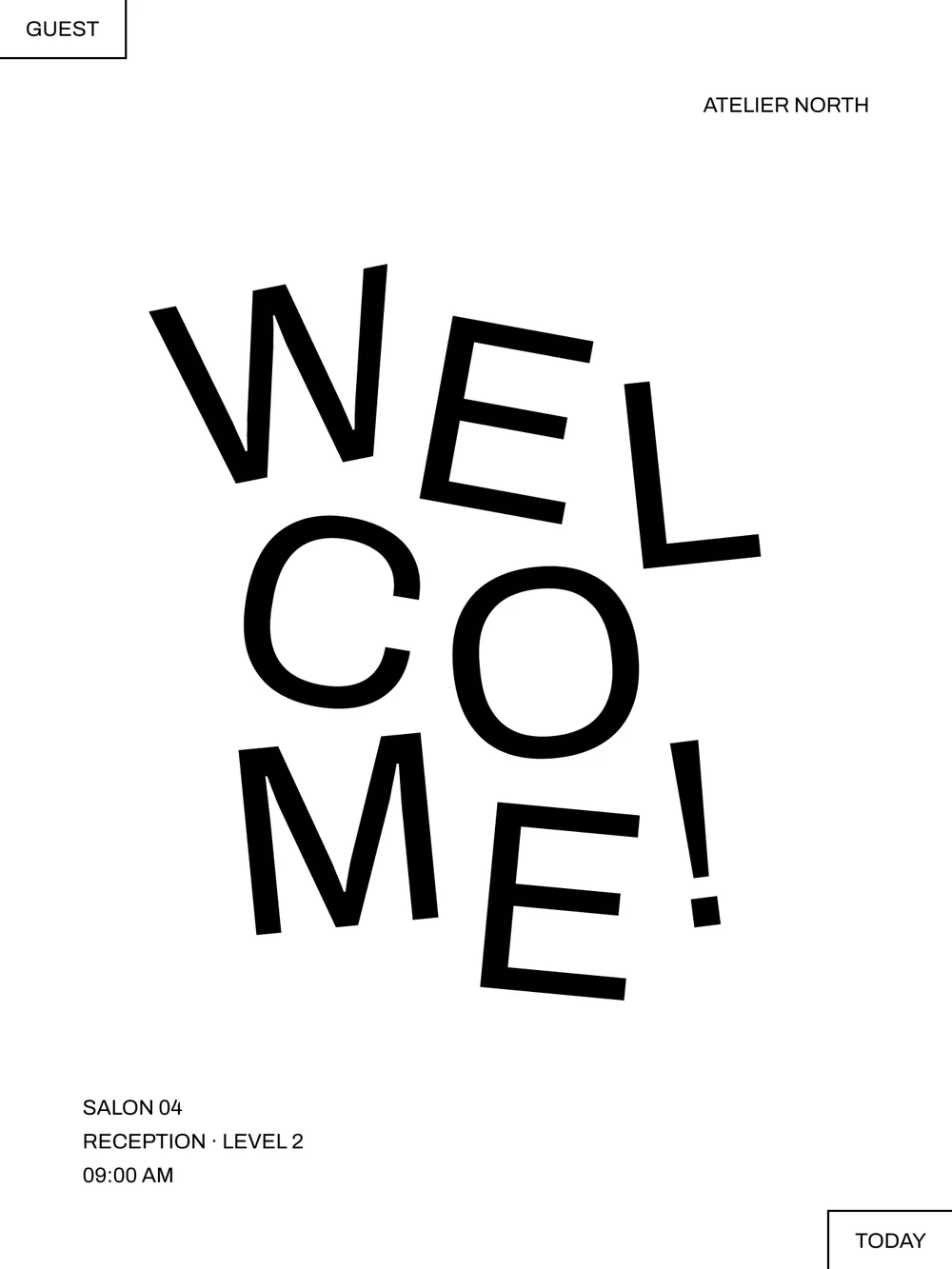
Personal Eight in the morning. The lobby already greets the studio expected at nine, and names the room.
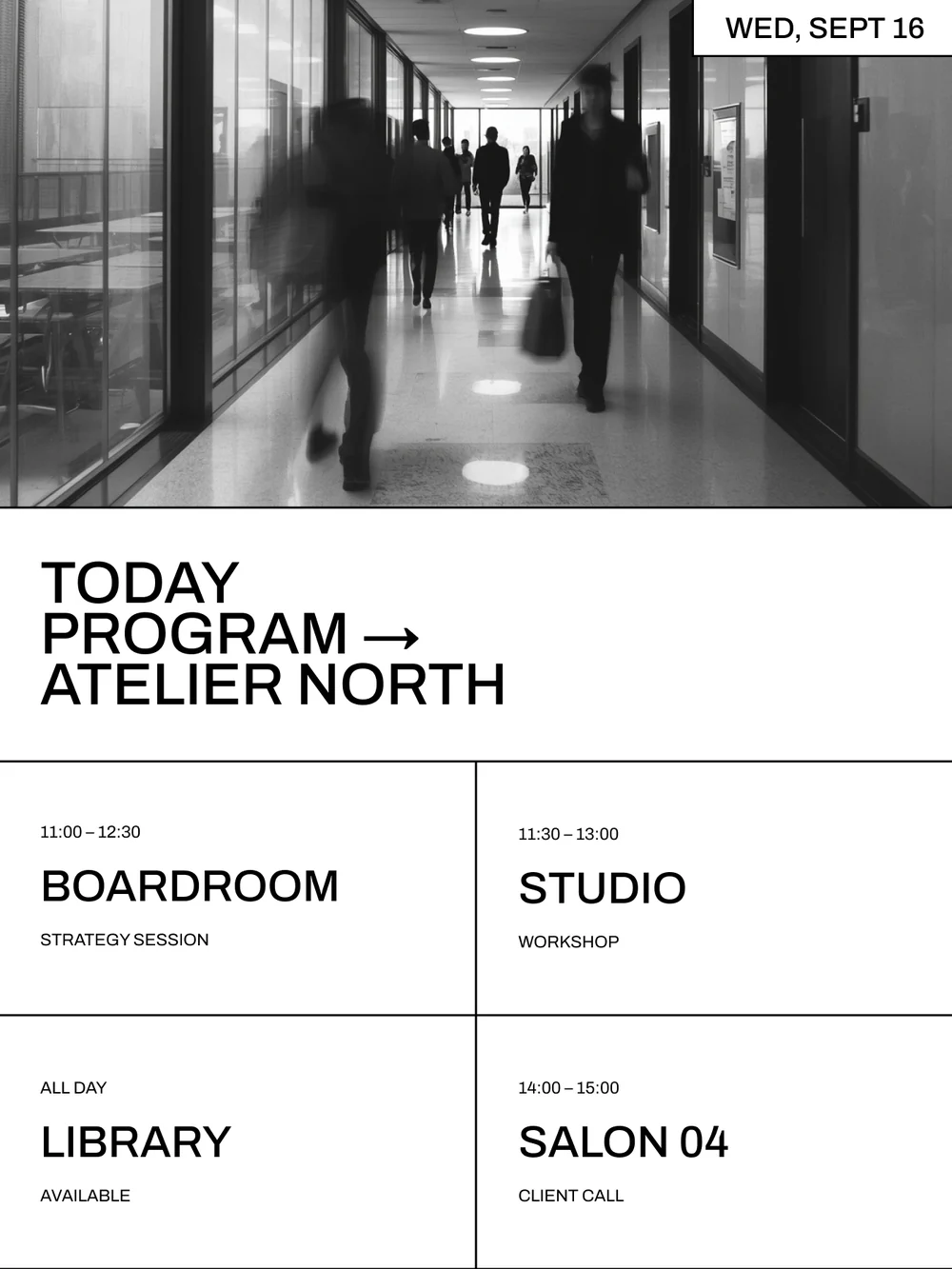
Information Eleven. The day's programme, room by room, with what is free and what is not.
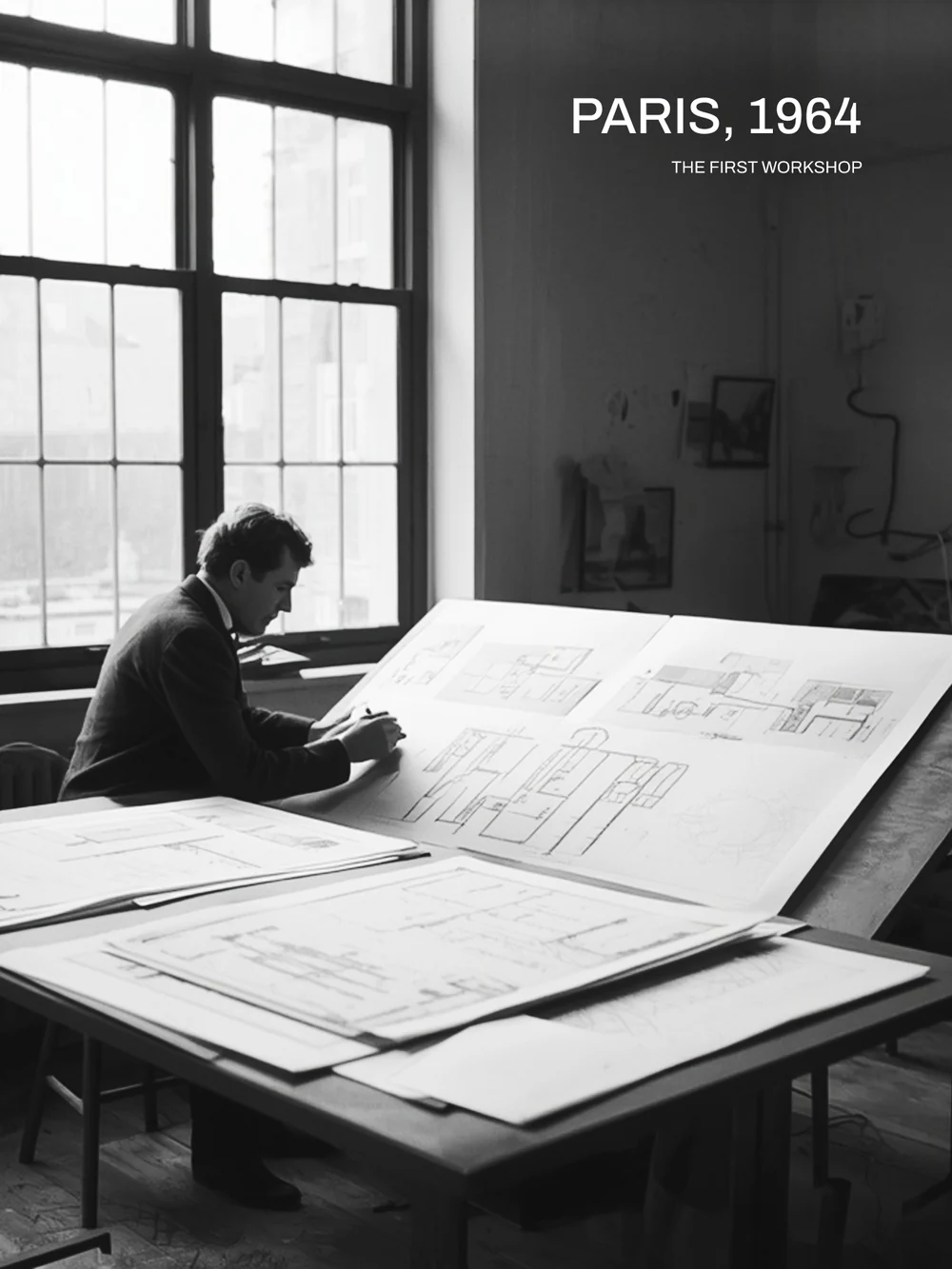
Ambience Two in the afternoon. Archive photographs dress the walls, and the house tells its own story.
Ambience Six in the evening. The last meeting is done, and the office becomes a place again.
Ambience The day before. The floor still belongs to the house, and shows its own images.
Revenue Eight in the morning. The whole floor turns over to the guest brand, in its own language.
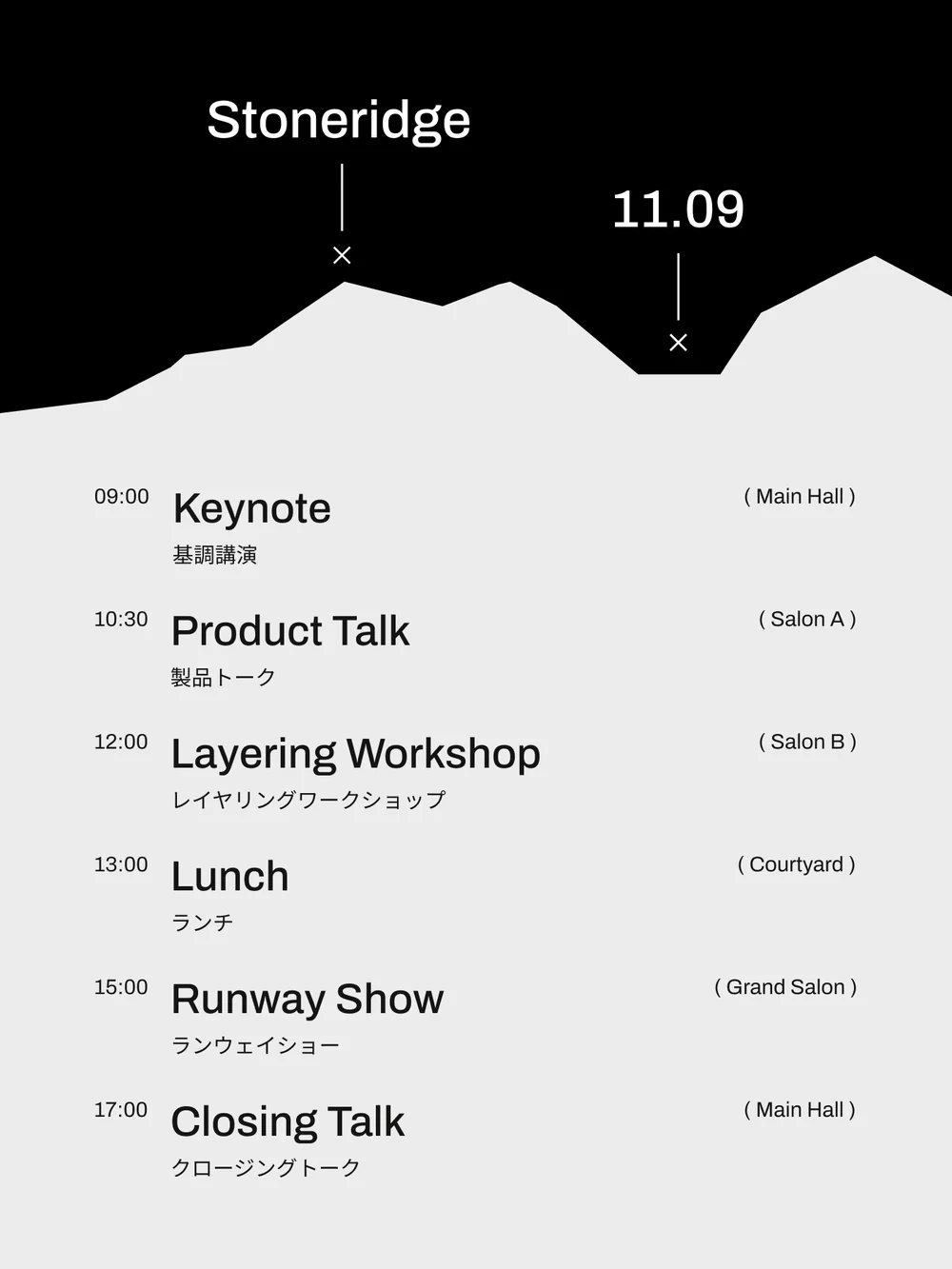
Information Eleven. The programme, hall by hall, in two languages, in the client's own type.
Personal Six in the evening. A photograph from the morning's show, and a word of thanks.
The wall changes on its own,
right on schedule.
Pick a space and walk through its day. Every image in this frame was scheduled ahead of time in Ginko Studio, and no one comes to change it.
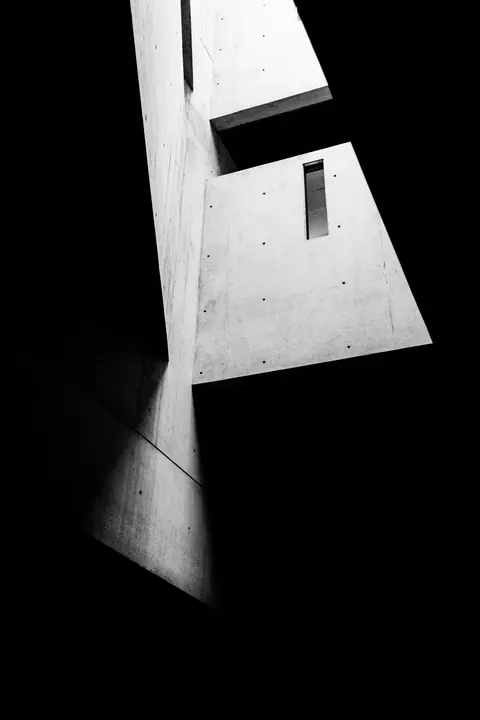
Starting Monday
Evening
Openings
Scan for the programme

Anywhere
One window, in every pocket.
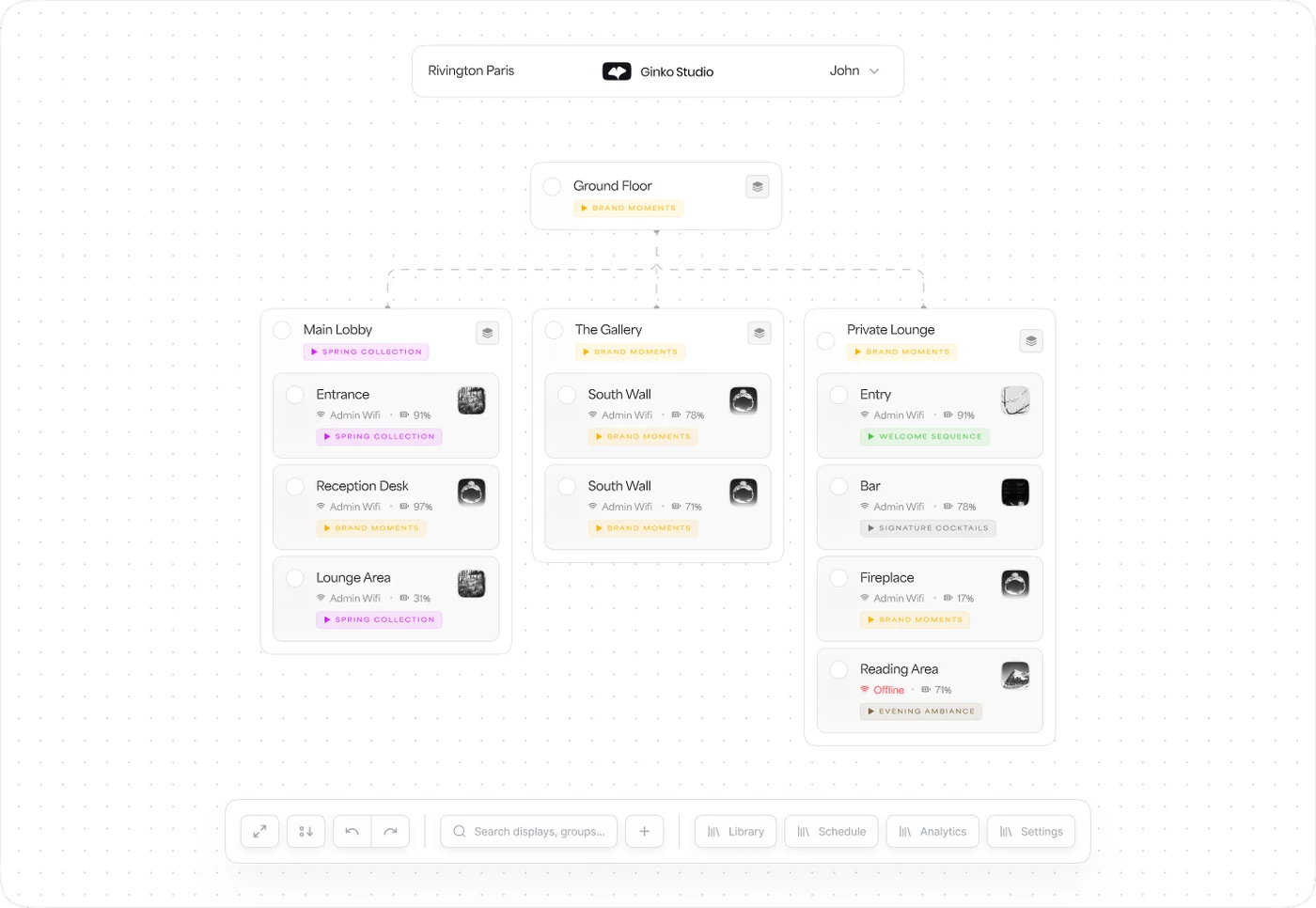
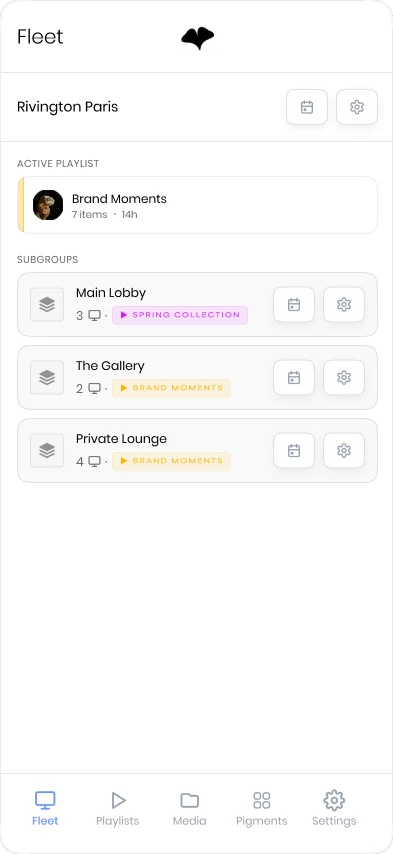
Ginko Studio is a web application. It opens on the phone in a corridor, on the tablet at the front desk, on the workstation at headquarters. The same fleet, the same rights, the same day, sized to the hand that holds it. Nothing to install, nothing to update.









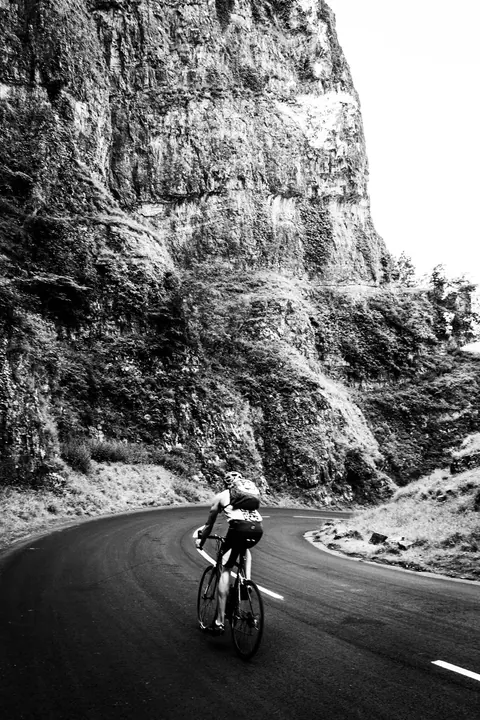
Visual library
A curated visual library,
an AI engine, and a store of mini-apps.
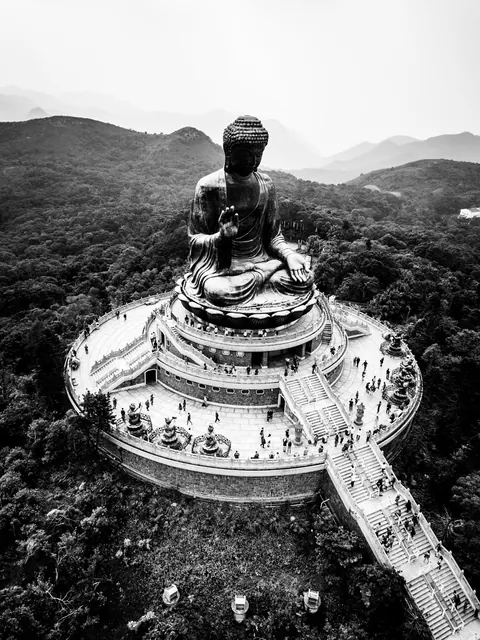
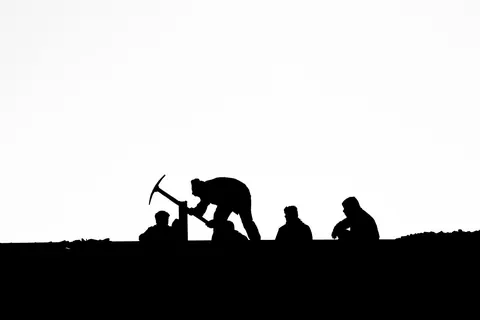
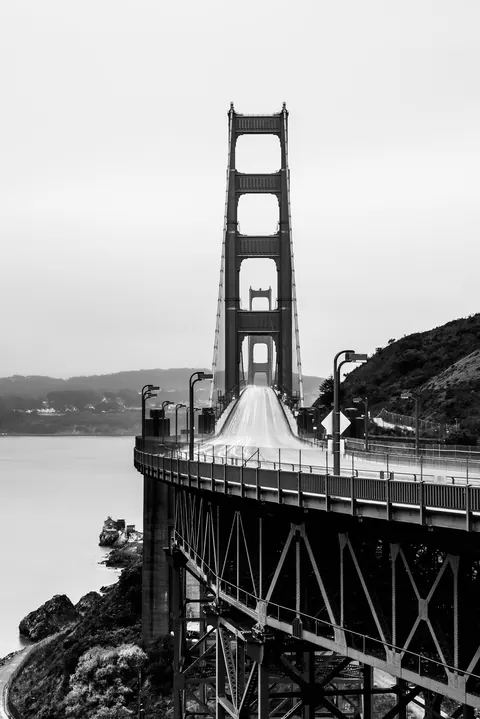
Browse a curated library of ambient visuals, or generate your own in seconds with the built-in AI engine. The Pigment Store adds mini-applications directly inside Studio, from image sourcing to portrait generation. All of it from Studio Pro.
The visual library, the AI engine and the Pigment Store come with the Pro and Scale licences.
Studio plans
Every display arrives with Studio.
Three licences. The first comes with the object; the others open up unlimited users, the visual library, scheduling, roles and reports as your fleet grows. Beyond Scale, terms are negotiated for the fleet.